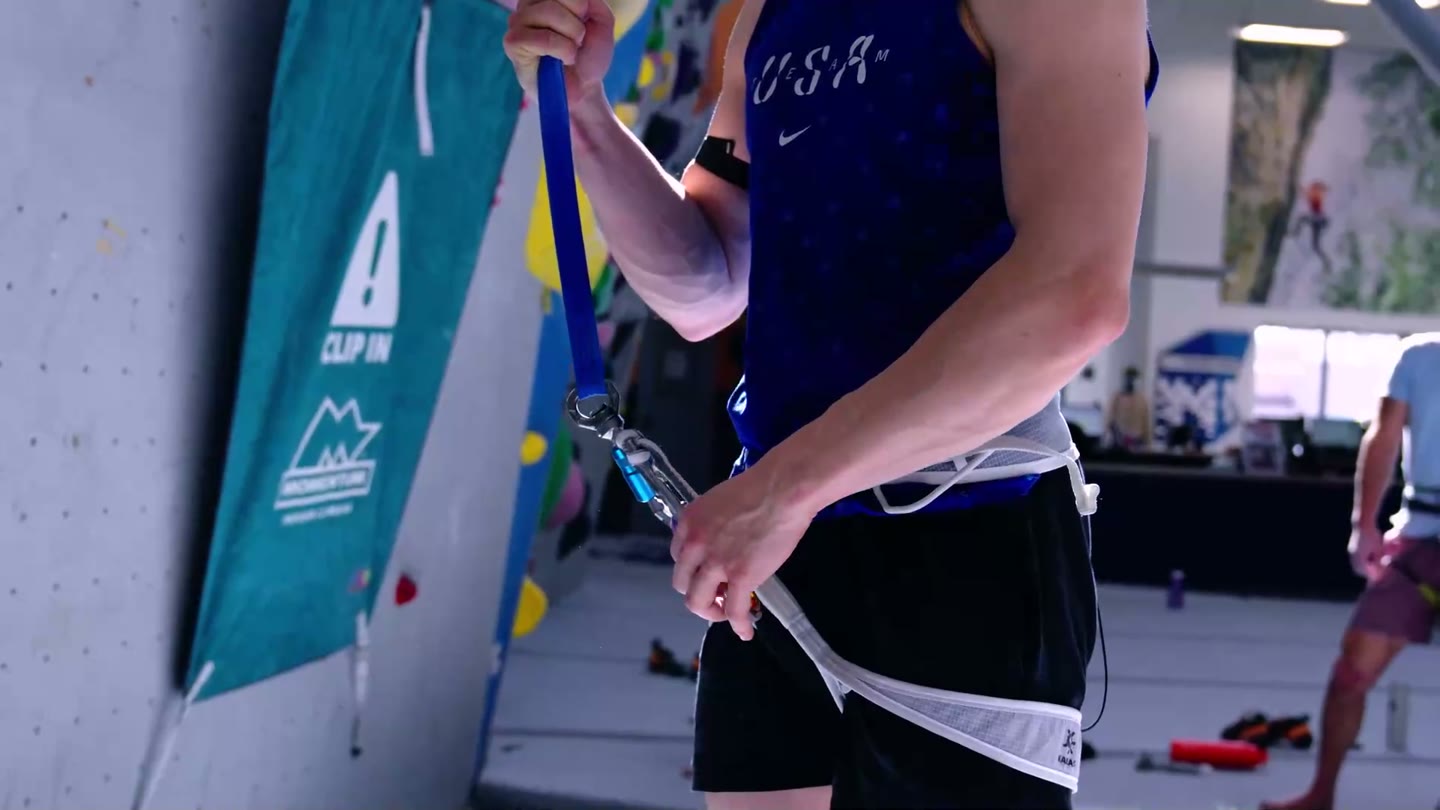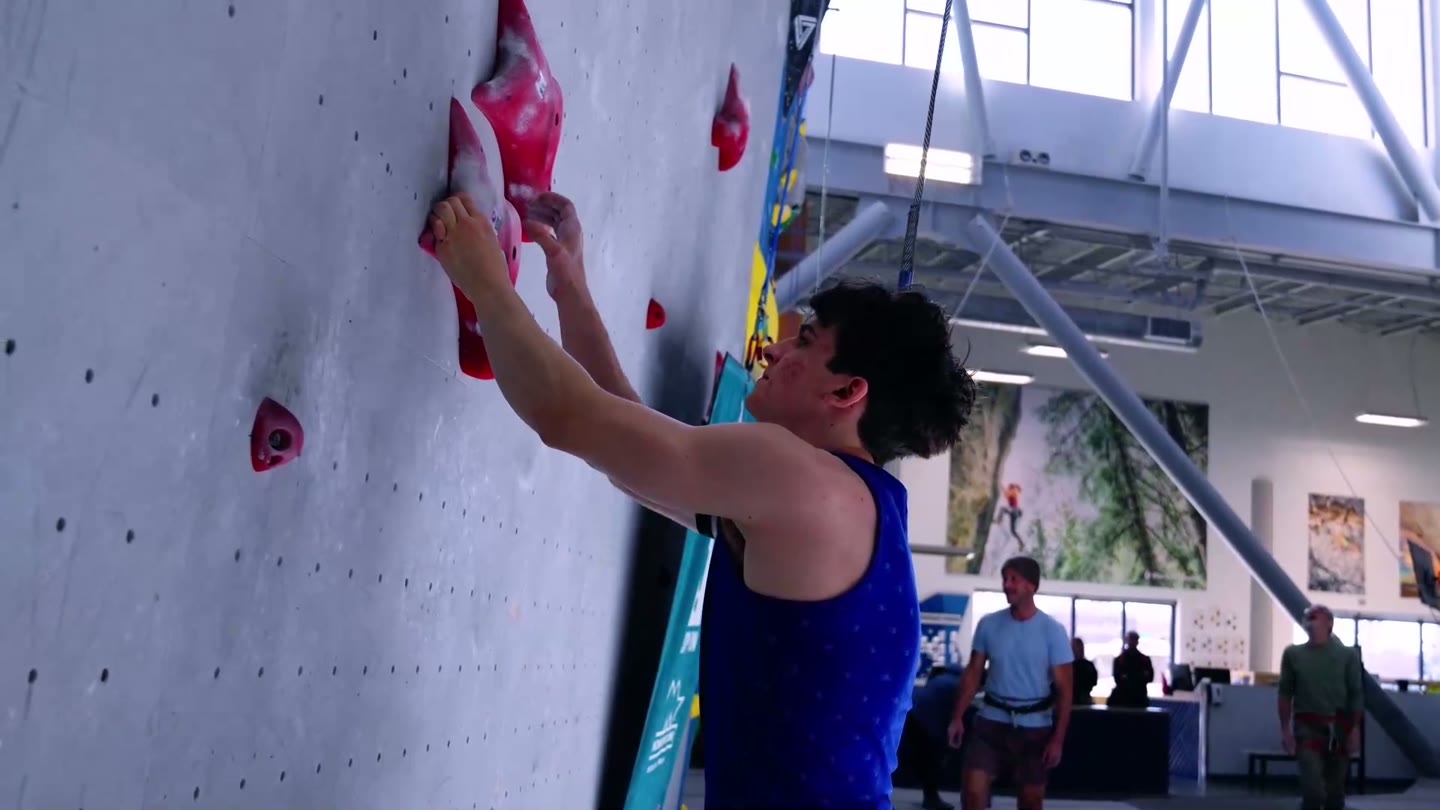


Speed climbing training splits into three parts: laps on the standard route for muscle memory, section work on the start, middle and finish, and off-wall strength and power work. Elite climbers alternate wall days with gym days, and we spend more time on the start and the finish than on anything in between. Here is how those pieces actually fit together in my training.
How do speed climbers train?
The route never changes, so the discipline rewards a kind of training no other climbing does: pure, deliberate repetition until the fastest sequence is the only sequence your body knows. But volume alone plateaus. The structure that works is a rotation between full-route laps, isolated section work at maximum intent, and physical preparation off the wall. Every session has one question attached: which hundredth is this for?
What does my training week look like?
I will describe the shape rather than pretend every week is identical. Race weeks, travel and recovery bend everything. The skeleton is: wall sessions on alternating days, each with a theme rather than a mileage target. One day is starts, short and explosive with long rests. One is sections, where a single six-hold stretch might get an hour. One is full runs under time pressure to rehearse racing rather than climbing. Between wall days: strength and power in the gym, and genuine rest, which took me years to respect.
Why do speed climbers run so many laps?
Because at full speed, nobody thinks. The route map has to live in the nervous system, not the conscious mind, and the only way it gets there is repetition. When people ask how I can climb 15 meters in under five seconds, the honest answer is that by race day I am not really deciding anything. I am releasing a movement that thousands of laps have already built. I broke down where those seconds actually go in anatomy of a sub-4.7 second run.
How do you break the route into sections?
Start, middle, finish, and they are trained almost as different sports. The start is a reaction and power problem: the race can be lost in the first two holds. The middle is rhythm, where moves blur into a single flowing shape, and where technique like the Tomoa Skip pays or punishes. The finish is commitment: leaving the wall early enough to fly at the buzzer. When a run underperforms, the stopwatch splits tell me which of the three sports failed.
What strength work does speed climbing need?
Leg drive first, which surprises people who think climbing is arms. A speed run is closer to a series of jumps than a series of pulls, so explosive lower-body power, hip drive and contact strength carry the run. Upper-body pulling matters most at the start and wherever the line demands a hard redirect. I keep the description general on purpose: the right program depends on your base, and copying an elite athlete's loading is how people get hurt.
How do you stop chasing the stopwatch?
The classic mistake at every level: timing every lap, every session. The stopwatch is a truth teller, but checked constantly it becomes a slot machine, and climbers start gambling for a number instead of building the movement that produces it. I time full runs on designated days only. The other days are for making the movement automatic, and I do not want a number looking over my shoulder while that happens.
What should a beginner do in their first month?
Learn the route at half speed until the sequence is boring. Fall in love with the start. Rest more than feels productive. And climb the whole wall relaxed before you ever climb it fast, because tension is the most expensive thing you can carry up 15 meters. When you are ready for real structure, every drill, progression and hold-by-hold guide I use is published openly on LearnSpeedClimbing. That site exists so that the knowledge in this sport stops being a secret.
Quick answers
How often should you train speed climbing?
Most serious speed climbers are on the wall three to five days a week, alternating with strength work and rest. Beginners progress fastest on less volume than they expect, done with more intent.
Do you need a 15 meter wall to train?
No. Most of the skills live in sections, and a 10 meter wall with standard holds covers the majority of the route's demands. Full-height walls matter most for race rehearsal.
Is speed training different from boulder training?
Substantially. Bouldering trains problem solving on ever-changing terrain. Speed trains perfect execution of fixed terrain. The physical overlap is real, but the mental disciplines are almost opposites.
Want the full system behind these numbers? Every drill, every hold, every second: it is all on LearnSpeedClimbing.
Learn speed climbing →