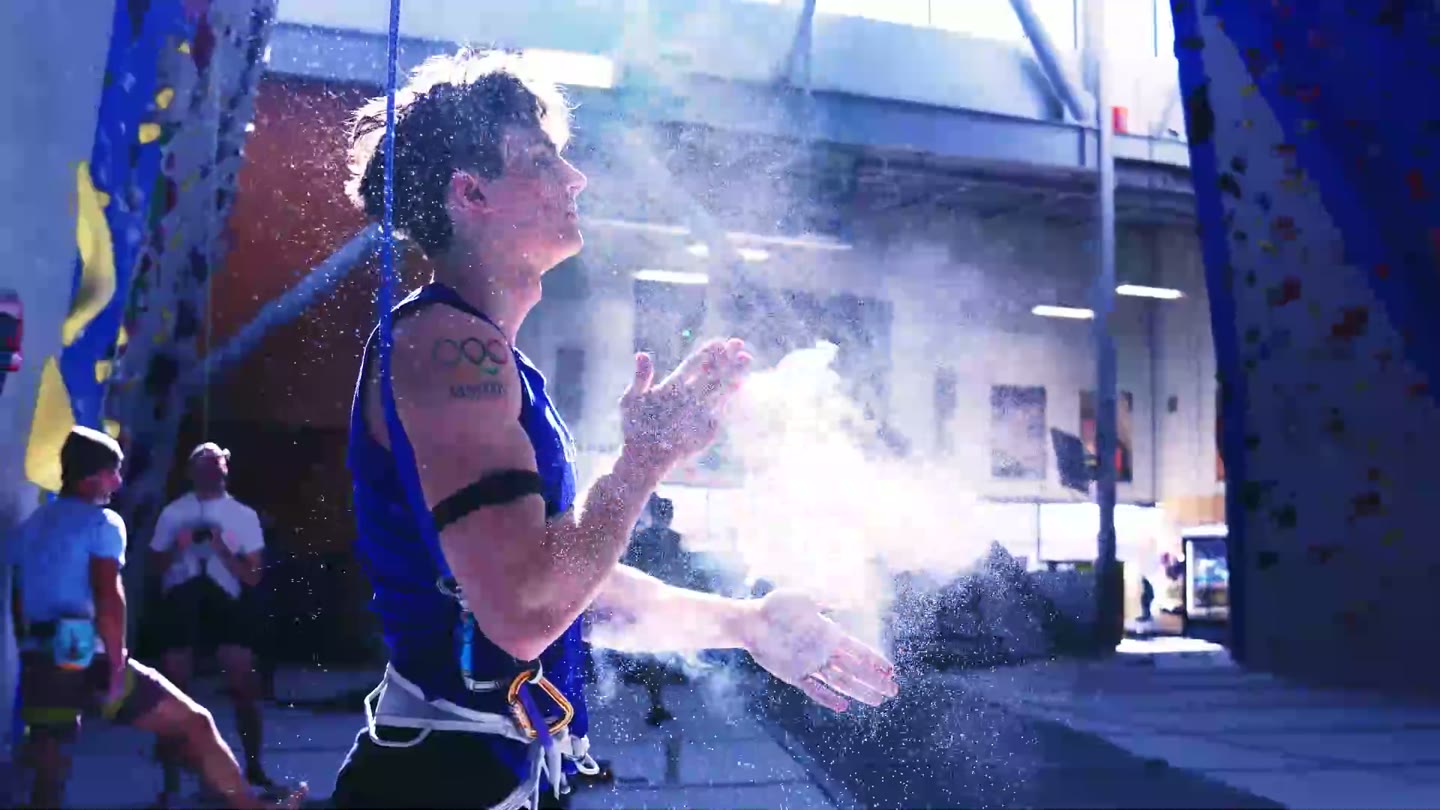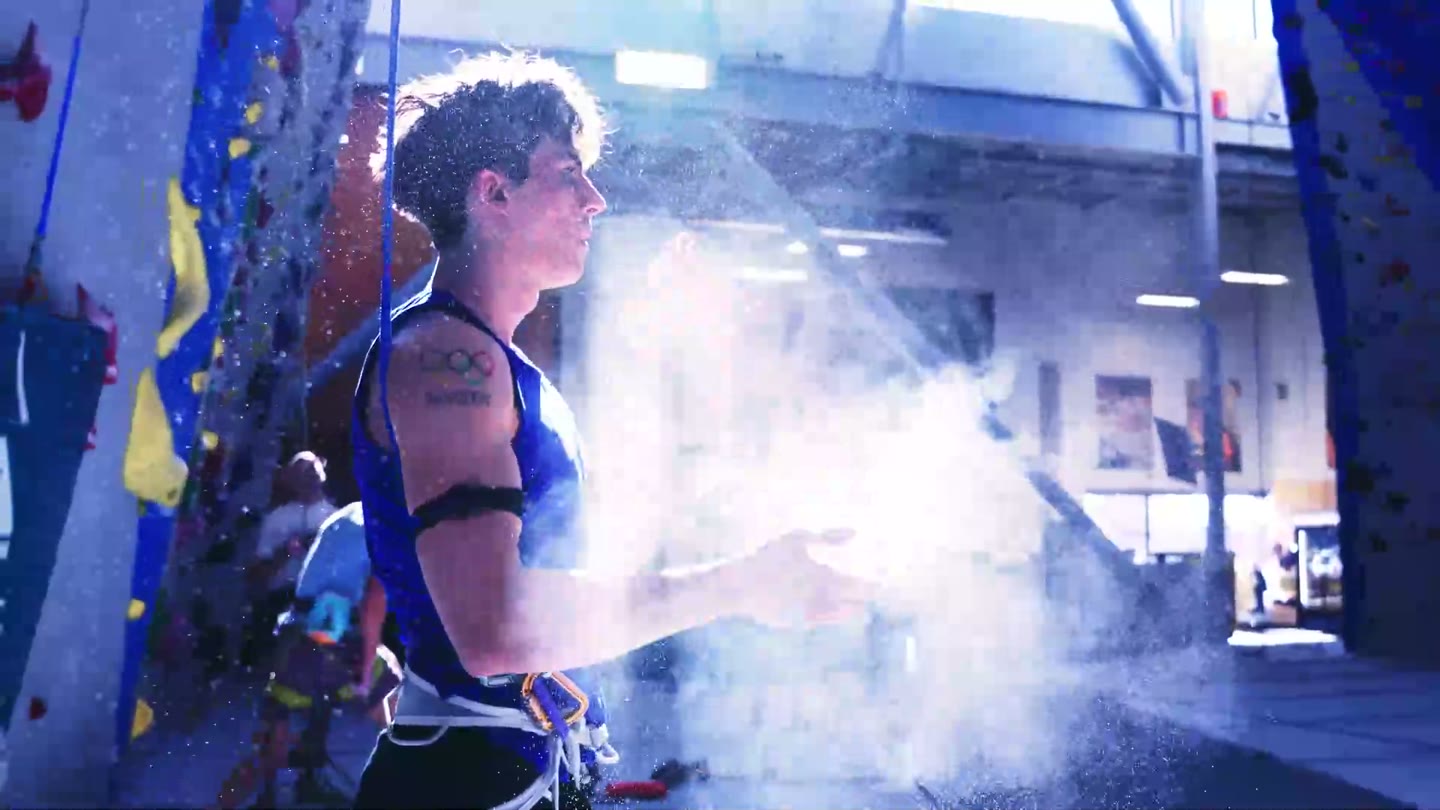

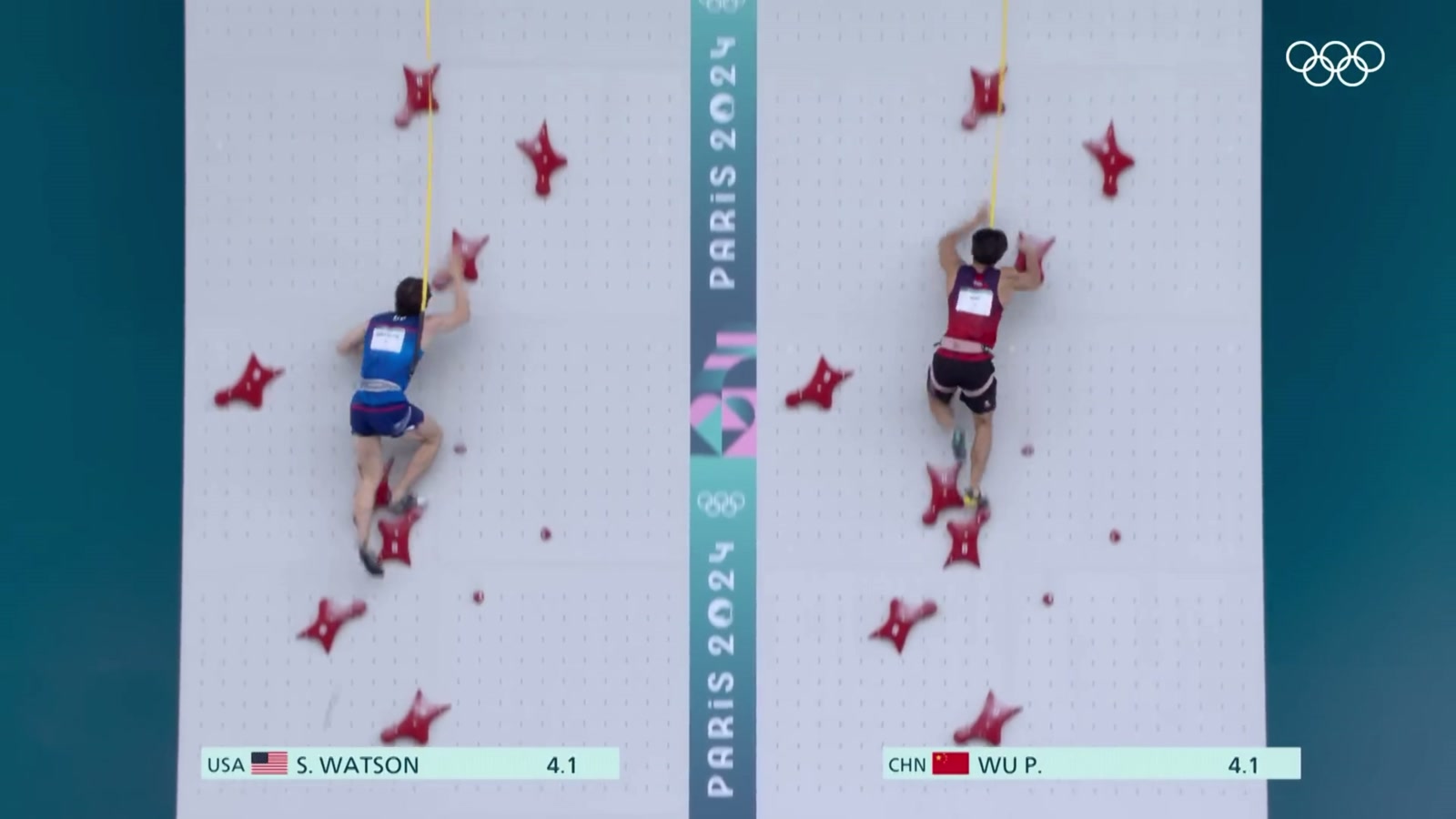
I won bronze in the men's speed final at the Paris 2024 Olympic Games, and I broke the world record twice on the way. I was 18 years old. This is what those days were actually like, from the first qualifying run to the moment the clock stopped in the small final.
What happened in the Paris 2024 men's speed event?
Paris was the first Games where speed climbing stood alone as its own medal event, separated from the combined format. Over three days I ran the fastest climbing of my life to that point, reset the world record twice, and finished with a bronze medal around my neck at 18. The full results of every round are on my results page.
What does the start line feel like?
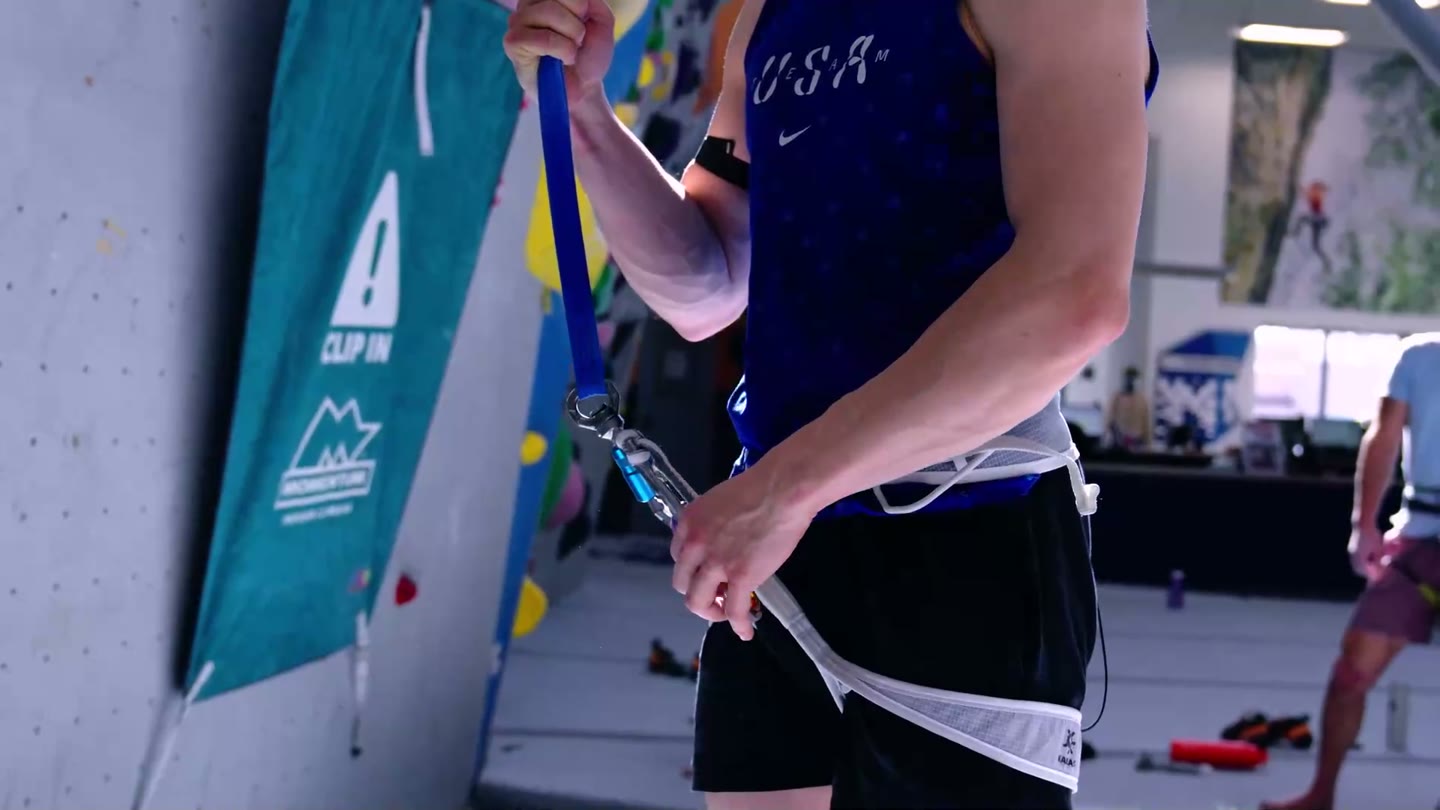
People imagine noise. What I remember is the opposite: a narrowing. The wall in front of you is the same wall from your home gym, the same fifteen meters you have climbed thousands of times, and some part of your nervous system knows the difference anyway. Your heart wants to sprint before the beep. The work of the final ten seconds before a run is convincing your body that this is just the wall, and the wall never changes.
How do you prepare for a five second event?
You do not warm up for a five second race the way you warm up for anything else. The muscles need to be at full output from the first movement, with zero buildup. My preparation is a fixed ritual: the same activation sequence, the same number of practice starts, the same music, the same minute-by-minute countdown. The ritual makes the biggest day of your life feel like a Tuesday session, which is the entire job.
The record run
You do not feel a world record while it is happening. A perfect run feels like nothing at all, just the wall passing. The information arrives afterward, from the clock, and in Paris it arrived twice. What I remember is quiet in the body, the absence of every small error I had spent years sanding away.
The semi-final, honestly
I lost my semi-final. That is part of this story and I will not write around it. In a discipline decided by hundredths, the margin between the gold medal race and the bronze medal race can be a fingertip. What the semi-final taught me is that the reset is a skill in itself: I had minutes to grieve a race and then be perfect again. The bronze run was, in some ways, the hardest and best thing I did in Paris.
What winning bronze changed
An Olympic medal changes the outside faster than the inside. The inside still wanted the top step, and still does. What the outside gave me was a platform: proof that an American teenager could stand on an Olympic podium in a discipline the country had barely noticed, and a reason for people to listen when I said speed climbing was about to become appointment viewing. That is why I built LearnSpeedClimbing, and it is why the road to Los Angeles is planned in public.
What I would tell a young climber about their first big final
The race is decided before the beep, by everything you repeated when nobody was watching. So repeat it honestly. The clock is the fairest judge you will ever compete in front of. Whatever it says about you is true, and the useful move is to make peace with that before you set your feet.
Want the full system behind these numbers? Every drill, every hold, every second: it is all on LearnSpeedClimbing.
Learn speed climbing →